
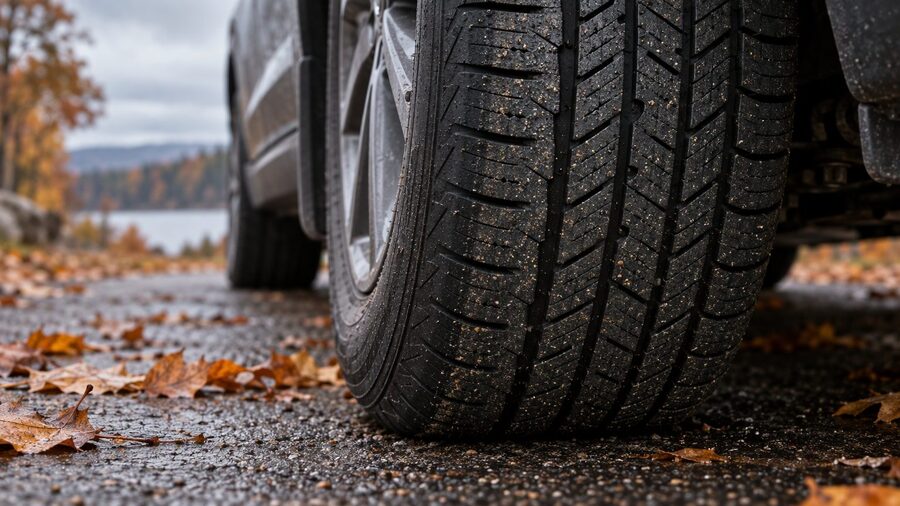
The Ontario Tire Guide: Winter, All-Season, and When to Repair or Replace
Pick tires for the weather you actually drive in, and book tire service when you can’t confidently judge wear or damage. Ontario’s wet autumn roads can demand your attention before the snow arrives.
The OPP says Ontario drivers generally don’t have to use winter tires, but CAA recommends switching at 7°C or colder. Your driving conditions still matter, and the Government of Ontario’s tire regulation sets minimum tread standards even when you’re keeping your current set.
Choose the right seasonal tire
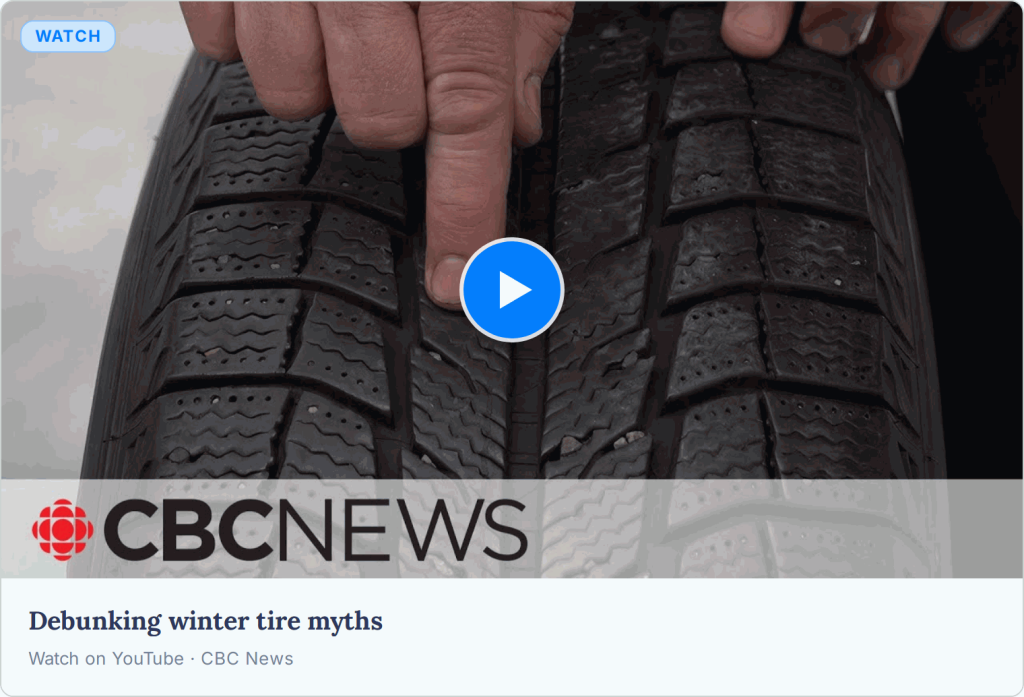
Winter tires are made for cold-weather driving; you shouldn’t take an all-season label as a promise of winter performance. The Government of Ontario’s winter-driving guidance says winter tires can shorten braking distances by as much as 25% in winter conditions. The guidance also identifies the three-peak mountain snowflake symbol as the mark for tires designed for use in severe snow conditions.
| Tire type | Intended conditions | Severe-snow identification | Practical consideration |
|---|---|---|---|
| Winter | Sustained cold and winter roads | Look for the severe-snow symbol | Plan seasonal installation and off-season storage |
| All-season | Milder weather on wet or dry roads | The all-season name alone doesn’t establish certification | Don’t assume the label means suitable winter traction |
| All-weather | Year-round driving that includes winter conditions | Check for the severe-snow symbol | Compare suitability with dedicated winter tires for your usual routes |
The difference between all-season and all-weather matters when you buy tires. Ask how well the tire suits cold-weather driving rather than trusting its category name, especially if your regular route includes untreated rural roads or an early-morning highway commute.
Fit a full matching set of winter tires instead of putting them only on the driven wheels. Tread patterns affect a tire’s traction and handling, and they also affect braking performance.
When to switch to winter tires in Ontario
Book your seasonal appointment before sustained cold weather arrives, rather than waiting for the first storm. CTV News reported on November 13, 2026, that the OPP urged drivers to fit winter tires before snow and freezing rain, while CAA explained that flexible rubber in the tires improves traction in cold weather.
Check the forecast for the hours when you’ll actually be driving. A mild afternoon doesn’t show you what conditions will be like on an early commute. Leave time during the appointment to deal with any problem the installer finds, such as a damaged tire that needs assessment before it goes back on the vehicle.
Tell the shop whether your seasonal tires are already fitted to separate wheels when you arrange tire changeover service in Ontario. Swapping complete wheel sets isn’t the same as taking tires off the rims and mounting another set on those same rims. Ask what the appointment includes and whether the shop needs you to bring your wheel-lock key.
The Government of Ontario’s Regulation 222/15 requires insurers to offer a winter-tire discount on applicable private-passenger automobile policies that they issue or renew on or after January 1, 2016. Each insurer decides its own discount and what documentation it requires. Ontario’s winter-tire insurance discount can reduce auto insurance rates by 2% to 5% on average.
Ask your insurer which tires qualify and which installation period applies before you book winter tire installation and inspection. Keep whatever purchase or service paperwork your insurer asks for.
Winter tire checks before driving
Check tire type and size before winter, plus tread condition, visible damage and cold tire pressure. Inspect the set you intend to use, including tires coming out of storage.
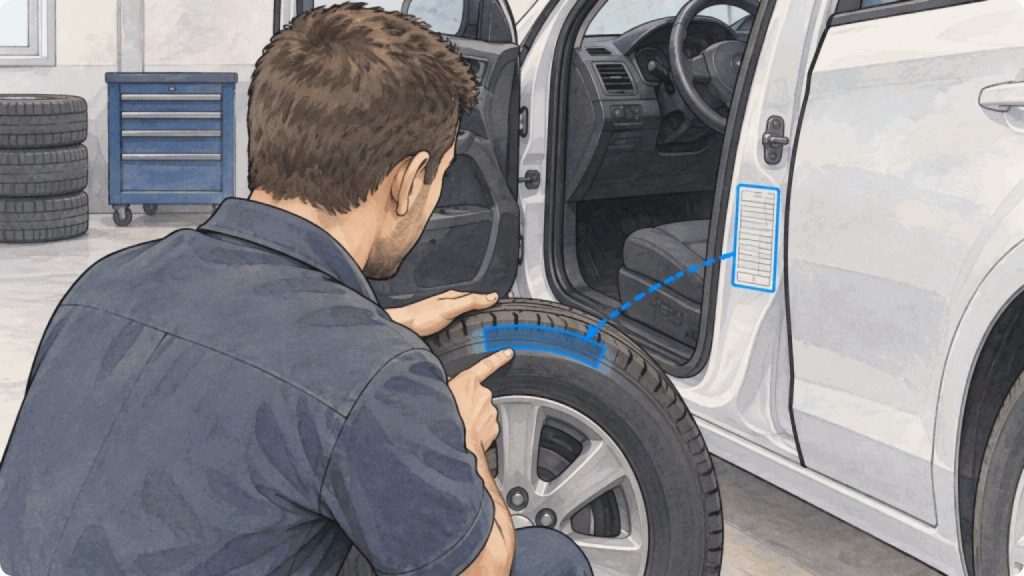
Step 1: Confirm the tire type and size
Match the tire’s size to the vehicle’s tire placard or owner’s manual to check that the set meets the vehicle’s specifications. Read the markings on the tire itself rather than relying on an old sales receipt. You’ll commonly find the tire placard in the driver’s door opening.
Have the fit checked before installation if you’re considering a different wheel size. A wheel that bolts onto the vehicle doesn’t show that the tire-and-wheel combination meets the manufacturer’s specifications.
Step 2: Check tread depth and uneven wear
Measure tread with a tread-depth gauge across the tread and around each tire, since a quick glance can miss low spots. Compare the inner and outer edges, and record each tire’s readings separately. Don’t ignore a worn patch just because the tread looks deeper elsewhere on that tire.
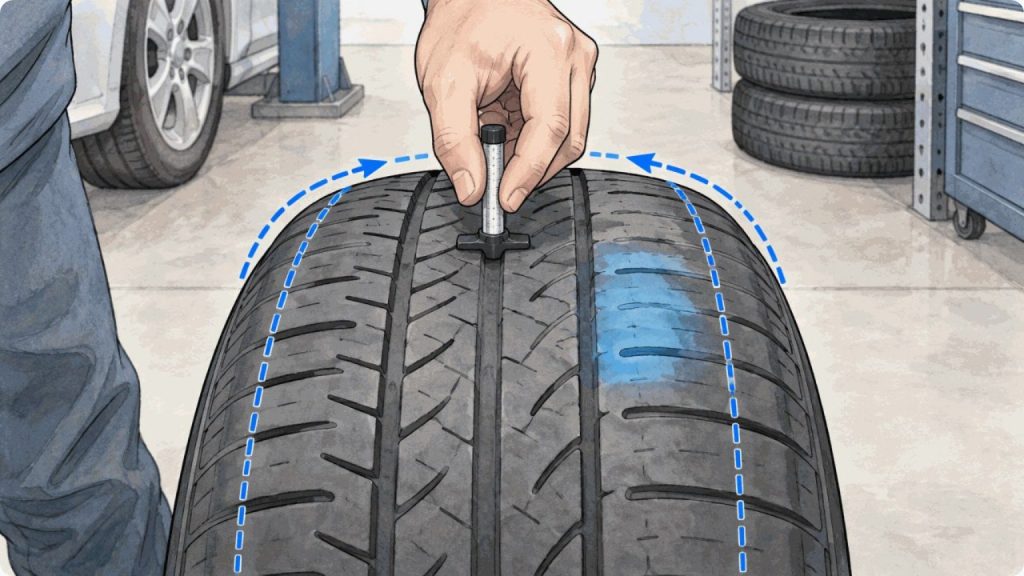
ElliotLakeToday.com reported on November 11, 2026, that East Algoma OPP urged drivers to check tread depth and uneven wear. Police also warned that all-wheel drive and four-wheel drive help with acceleration, but not stopping distance. Neither system means you can skip measuring tread on the driven wheels.
Step 3: Inspect for cracks and bulges
Inspect the tread and both sidewalls for cracks or bulges with a light, including the inner side wherever you can safely see it. Don’t crawl under a vehicle that isn’t safely supported. Record where you find damage so you can describe it accurately when booking an assessment.
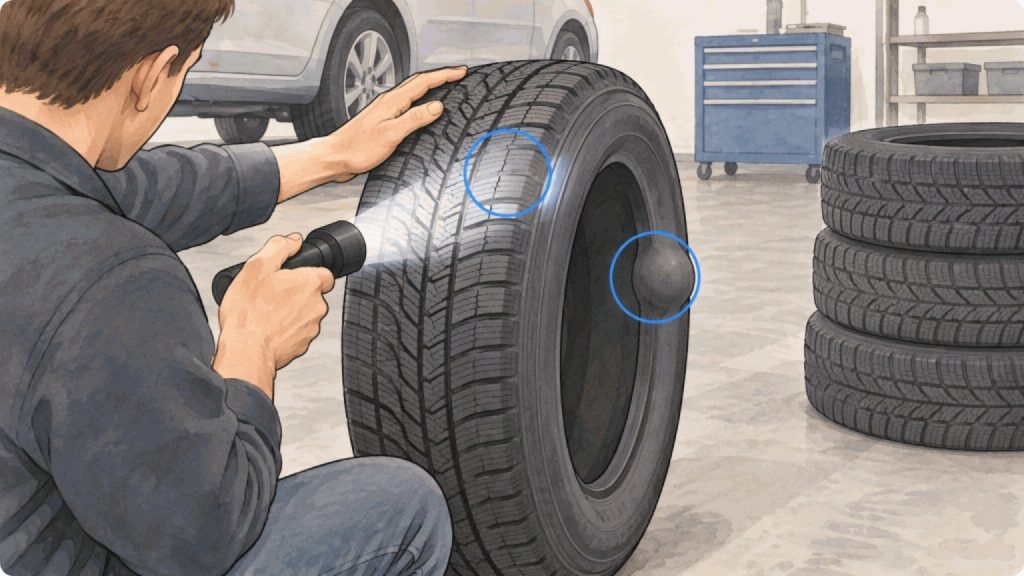
A bulge isn’t a cosmetic mark you can press flat or ignore. Don’t drive on a tire that’s bulging or visibly failing; arrange help rather than driving it to your scheduled appointment.
Step 4: Check pressure when the tires are cold
Measure pressure before driving warms the tires, and follow the vehicle manufacturer’s specified pressure rather than judging by the tire’s appearance. Follow the tire placard or owner’s manual, not the maximum pressure moulded onto the tire’s sidewall. Use a gauge to check even if the tire doesn’t look low.
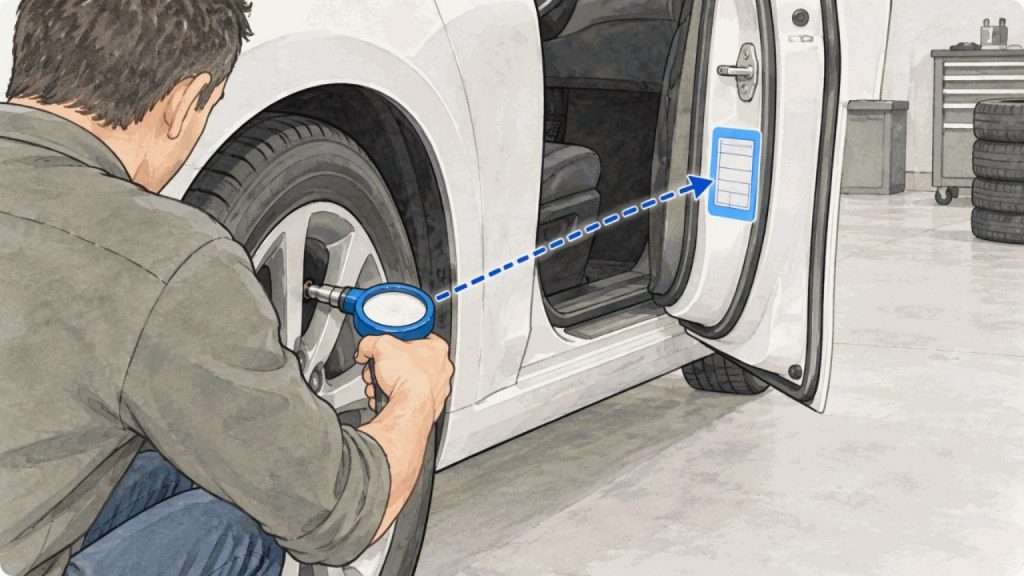
If a tire keeps losing pressure, note which one needs air and tell the technician. Ask the installer after a seasonal wheel change to check whether the tire-pressure monitoring system, if fitted, works with those wheels.
When tires need repair or replacement
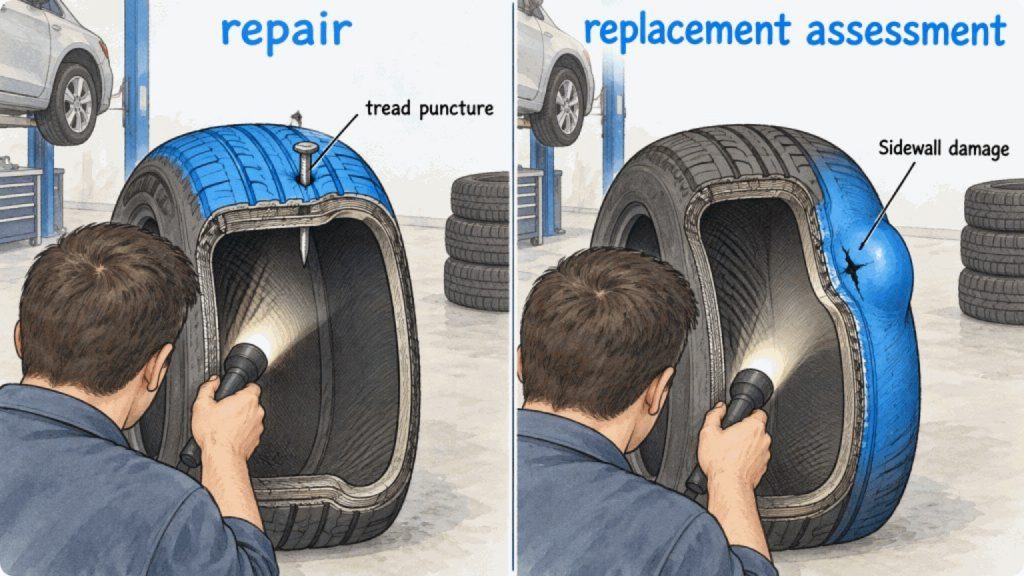
A technician may be able to repair a tread puncture after checking the tire internally. Sidewall damage or a bulge needs a replacement assessment, and so does tread that doesn’t meet the legal minimum. The visible hole alone doesn’t establish whether a tire can safely return to service.
Ontario’s Regulation 625 prohibits tires from having tread depth below 1.5 millimetres in any two adjacent major grooves at three equally spaced points around the tire’s circumference. Front tires on vehicles with a gross vehicle weight rating above 4,500 kilograms must have at least 3 millimetres, according to the Government of Ontario.
Worn tread is a concern on wet roads before winter even arrives. North Bay Nugget reported on November 14, 2026, that the OPP charged a driver with improper tires following a November 9 hydroplaning collision on Highway 11 near Callander. Officers found very little tread on both rear tires, and the driver suffered non-life-threatening injuries.
When to book professional service
Arrange professional tire service for an assessment when you can’t confidently judge tread wear, tire age, puncture damage, cracks, bulges, or uneven wear.
Tell the technician if you drove on the tire while it was flat or substantially underinflated, because an outside inspection can miss internal damage. Ask which manufacturer repair limits apply before approving a puncture repair. Bring any purchase records for an older tire, and ask the technician to check the manufacturer’s age guidance instead of judging its remaining life from tread alone.
A safer seasonal routine
Check your tires while you still have time to deal with problems before the weather changes. Contact your insurer about winter-tire eligibility while there’s still time to meet its conditions, and book service before the first sustained cold spell. Your seasonal decision should rest on the tires’ measured condition and your driving needs rather than the arrival of the first storm.