How Artificial Intelligence Could Shape the Next Generation of Driving
Artificial intelligence is already influencing modern driving in ways many motorists barely notice. Navigation systems adapt to traffic conditions in real time, vehicles monitor driver behaviour for signs of fatigue, and predictive maintenance alerts can identify mechanical issues before breakdowns occur.
What once sounded futuristic is gradually becoming embedded within everyday motoring. As automotive technology evolves, AI is shifting from a background support tool into a core part of how vehicles operate, communicate, and respond to drivers.
Rather than replacing drivers entirely, the next phase of automotive AI appears more focused on enhancing safety, efficiency, convenience, and personalisation. From adaptive safety systems to intelligent in-car experiences, artificial intelligence is beginning to reshape the relationship between motorists and their vehicles.
Navigation Is Becoming Predictive Rather Than Reactive
Navigation technology has advanced far beyond static route planning. Modern AI-powered systems increasingly analyse live traffic data, driving habits, weather conditions, road closures, and historical travel patterns to optimise journeys dynamically.
Instead of simply calculating the shortest route, newer systems attempt to predict potential delays before they happen. Some vehicles already recommend alternative routes proactively based on changing traffic patterns or driver preferences.
Artificial intelligence is also improving the contextual side of navigation. Vehicles can learn regular commuting habits, identify preferred charging locations for electric vehicles, and suggest fuel or charging stops based on remaining range and journey behaviour.
As connected infrastructure develops further, navigation systems may eventually communicate directly with traffic networks, road sensors, and surrounding vehicles to improve traffic flow and reduce congestion more efficiently.
This shift reflects a broader transformation in automotive technology: vehicles are becoming increasingly responsive rather than purely mechanical.
Predictive Maintenance Could Change Vehicle Ownership
One of the most practical uses of AI in motoring is predictive maintenance.
Traditional maintenance schedules are generally based on mileage or fixed servicing intervals. AI-powered systems, however, can monitor real-time vehicle performance and identify subtle patterns linked to potential failures before they become serious problems.
Sensors already track engine performance, battery condition, tyre pressure, brake wear, and fluid systems in many modern vehicles. Artificial intelligence allows that data to be interpreted more intelligently by identifying irregularities that may indicate developing faults.
This approach could reduce unexpected breakdowns and improve long-term reliability while helping owners manage servicing more efficiently.
Electric vehicles are particularly suited to predictive diagnostics because of their software-driven architecture. Manufacturers increasingly use over-the-air updates to improve vehicle systems remotely without requiring workshop visits.
Over time, this may fundamentally alter how motorists interact with vehicle maintenance. Cars are gradually becoming connected systems capable of monitoring their own health continuously.
Adaptive Safety Systems Are Becoming More Intelligent
Safety remains one of the most important areas of automotive AI development.
Many modern vehicles already feature driver-assistance systems such as lane-keeping support, adaptive cruise control, automatic emergency braking, and collision detection. Artificial intelligence allows these systems to respond more dynamically to complex driving environments.
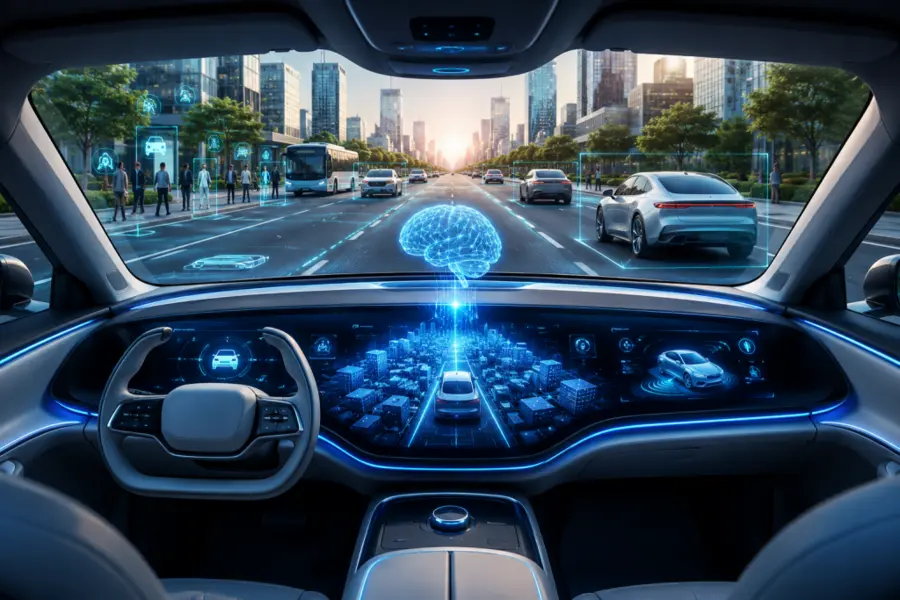
Rather than relying solely on fixed programmed responses, AI-assisted systems can interpret large amounts of environmental data in real time using cameras, radar, lidar, and onboard sensors.
This allows vehicles to detect hazards more accurately and react more quickly than earlier driver-assistance technologies.
Driver monitoring systems are also evolving rapidly. Some vehicles can now detect signs of fatigue, distraction, or reduced attention by analysing steering behaviour, eye movement, and driving patterns.
Importantly, most manufacturers are positioning these technologies as support systems rather than replacements for human drivers. The focus is currently on reducing risk and improving awareness rather than fully autonomous driving.
The gradual integration of these systems may make driving significantly safer over time while still preserving driver involvement.
Cars Are Becoming Personalised Digital Environments
Artificial intelligence is also changing the emotional and experiential side of motoring.
Modern vehicles increasingly adapt to individual driver preferences automatically. Seat positions, climate settings, infotainment layouts, driving modes, and navigation routines can now be personalised through connected driver profiles.
Voice assistants are becoming more conversational and context-aware, allowing drivers to interact with vehicle systems more naturally. Future AI systems may eventually anticipate driver preferences before commands are even given.
This growing emphasis on personalisation reflects wider consumer expectations shaped by smartphones, streaming platforms, and digital ecosystems. Drivers increasingly expect vehicles to behave like connected personal environments rather than static machines.
Vehicle identity has also become more important within modern automotive culture. Across enthusiast communities, motorists increasingly view visual presentation and customisation as part of self-expression, with companies like Plates Express reflecting broader interest in vehicle individuality alongside technological innovation.
AI Could Reshape Urban Mobility
Artificial intelligence is likely to influence not only individual vehicles, but also wider transport systems.
Traffic management networks powered by AI could eventually improve congestion control by coordinating signals, monitoring traffic density, and adjusting road systems dynamically. Shared mobility services may also rely heavily on predictive algorithms to optimise vehicle availability and route efficiency.
For electric vehicles, AI may help manage charging infrastructure more intelligently by balancing energy demand and predicting charging patterns across urban areas.
Autonomous driving remains part of this long-term discussion, although full self-driving capability continues to face technical, legal, and ethical challenges. In the near future, semi-autonomous assistance systems are likely to expand gradually before fully driverless transport becomes commonplace.
The transition is expected to be incremental rather than immediate.
The Human Element Still Matters
Despite rapid technological progress, driving remains deeply connected to human behaviour and emotion.
Many motorists continue to value the sense of control, freedom, and engagement associated with driving. Automotive manufacturers therefore face the challenge of integrating artificial intelligence without making vehicles feel detached or overly automated.
The most successful AI systems may ultimately be those that operate subtly in the background — improving safety, reducing stress, and simplifying ownership without overwhelming the driving experience itself.
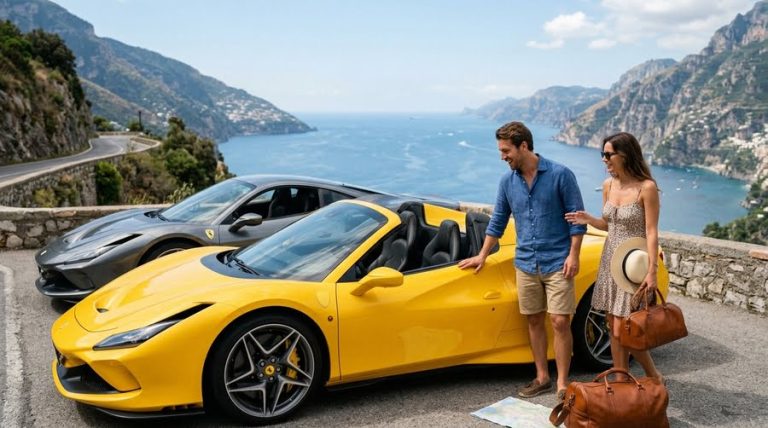
This balance is especially important within enthusiast culture, where emotional connection to vehicles remains central.
A More Intelligent Driving Future
Artificial intelligence is steadily transforming modern motoring, not through dramatic overnight change, but through gradual integration into everyday driving experiences.
AI-powered navigation, predictive maintenance, adaptive safety systems, and personalised digital environments are already influencing how vehicles function and how drivers interact with them. As these technologies become more advanced, cars will likely become increasingly responsive, connected, and intelligent.
Yet the future of driving is unlikely to revolve solely around automation. Instead, artificial intelligence appears set to enhance the relationship between motorists and vehicles by making driving safer, more efficient, and more personalised.
The next generation of vehicles may be defined not only by mechanical engineering, but also by how intelligently they understand and support the people behind the wheel.