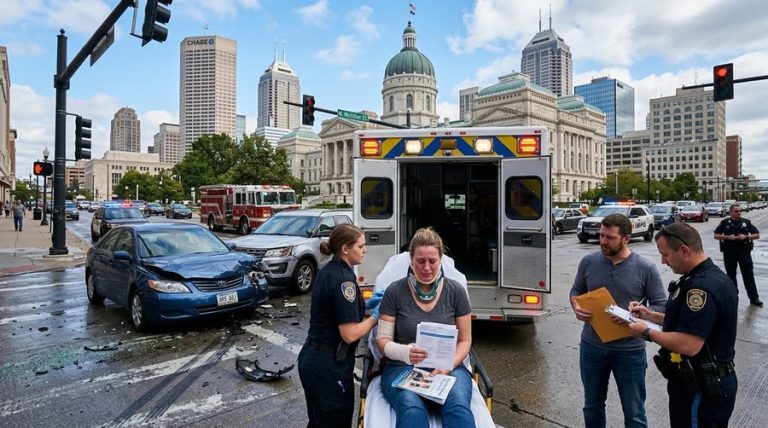

The Quiet Clues That Show a Driver Wasn’t Watching the Road
A distracted driver rarely leaves a confession at the crash scene. More often, the truth sits in smaller details: a missing brake mark, a drifting lane position, a delayed reaction, or a story that changes once the evidence starts to surface.
Modern crashes often leave a quiet trail of proof. Phones, dashcams, traffic cameras, passengers, vehicle data, and witness statements can all help show whether someone was watching the road or looking somewhere else when it mattered most.
No Time to React
One of the clearest signs of distraction is what a driver failed to do before impact. When traffic slows, a focused driver usually brakes, swerves, or leaves some sign of panic on the road. A distracted driver may hit with little warning.
That absence can say a lot. No skid marks, no clear attempt to change lanes, and a hard rear-end crash can point to a driver who never saw the danger forming ahead. Rosenfeld Injury Lawyers notes that distractions can come from phone use, GPS, passengers, fatigue, or emotional stress, which is why the final seconds before impact often matter in a distracted-driving lawsuit.
The Vehicle’s Path Can Tell Its Own Story
A distracted driver often gives the road fewer corrections than an alert one. The vehicle may drift across a lane line, run wide through a turn, or continue forward while every other driver reacts.
Those movement patterns can be especially telling in rear-end crashes, sideswipes, and intersection collisions. A driver looking down may not notice that traffic has stopped. A driver adjusting a screen may enter a turn late. A driver focused on a passenger may miss a red light until there’s no room left to recover.
Crash photos, lane markings, debris location, and vehicle damage can help piece together that path. When the story from the driver’s seat doesn’t match the scene, the road often gives a clearer account.
Witnesses Often Catch What Drivers Miss
People outside the vehicle may notice a distraction before anyone checks a phone record. A nearby driver might see someone looking down at their lap. A pedestrian might remember a car drifting before the crash. A passenger might recall the driver reaching for something, changing a song, or arguing moments before impact.
These details can feel small at first, but they help build a timeline. A witness does not have to explain the whole crash to be useful. One clear observation, such as a driver’s head position or a vehicle moving strangely, can support the physical evidence already left on the road.
Phone Records Can Fill In the Missing Seconds
Distraction often happens in a gap no one sees clearly. A driver looks down. Traffic slows. The crash happens before anyone understands why. Phone records and device data can help close that gap by showing whether a call, text, app use, or other activity lined up with the moment of impact.
The danger is real. NHTSA warns that reading or sending a text can take a driver’s eyes off the road for about five seconds. At highway speed, that can cover the length of a football field without the driver truly watching where the vehicle is going.
Digital evidence does not have to stand alone. When it matches witness statements, crash damage, and the vehicle’s path, those missing seconds become much harder to explain away.
Distraction Is Not Always a Phone
Phones get the most attention, but they are only one part of the problem. A driver can lose focus while adjusting a navigation screen, reaching for food, talking to passengers, checking a mirror for too long, or reacting emotionally to a conversation.
That matters because a driver may deny texting and still have been distracted. The real question is whether their attention was on the road when the crash became avoidable. A spilled drink, an open food wrapper, a passenger statement, or a sudden correction can all help show where the driver’s focus was in the moments before impact.
Video and Vehicle Data Can Strengthen the Timeline
Dashcam footage, traffic cameras, and nearby security cameras can show what people miss in the confusion after a crash. A few seconds of video may reveal lane drift, late braking, a driver’s head position, or a vehicle moving forward while surrounding traffic slows.
Vehicle data can add another layer. Speed, braking, steering, and impact details may help explain whether the driver reacted in time or failed to respond at all. When those records line up with witness statements and crash damage, the timeline becomes harder to dispute.
Footage can be especially useful when both drivers remember the crash differently, which is why preserving dashcam evidence after a collision can make a major difference.
Small Clues Can Speak Loudly
Distracted driving is often proven through patterns rather than one dramatic piece of evidence. A missed brake response, a drifting vehicle, a witness who saw the driver looking down, and a phone record from the same minute can all point in the same direction.
After a crash, those details can fade quickly. Photos get missed, witnesses leave, footage is overwritten, and vehicles are repaired or moved. Anyone involved in a serious collision should document what they can, get medical care, save any available footage, and avoid relying on memory alone.
A driver who was not watching the road may try to explain the crash as unavoidable. The evidence may tell a different story, one small clue at a time.