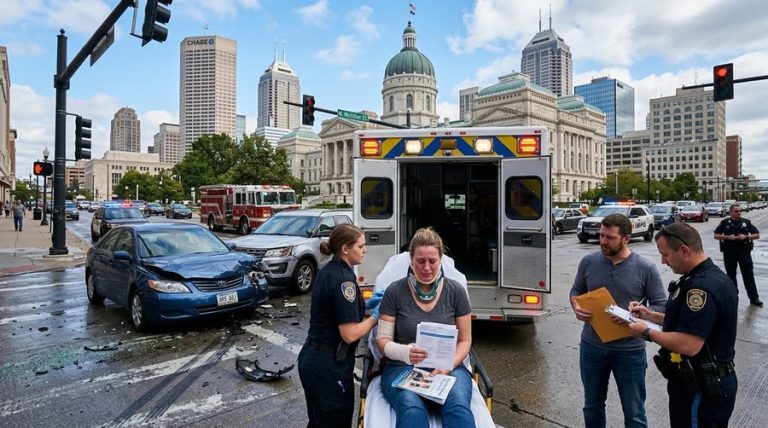

Types of Car Accidents and the Injuries They Lead To
Car accidents aren’t all the same. They come in several forms, and the type of crash usually dictates the type of injuries that follow. Some leave you with nothing but a nasty bruise and a headache, while others lead to broken bones or serious head trauma.
Understanding the common causes of car accidents helps you recognize risks and, hopefully, stay a little safer out there.
Most of these incidents are tied to driver behavior or just plain bad luck with road conditions. The way your body moves during impact is what really determines the injuries, whether it’s whiplash from a rear-end crash or severe trauma from a head-on collision. Side-impact, rollover, and single-vehicle accidents can also lead to serious injuries like fractures, organ damage, or spinal issues.
Rear-End Collisions
Rear-end collisions happen when someone is looking at their phone or following too closely, and suddenly, they crash into the car ahead. This type of accident is incredibly common in heavy traffic or at stoplights. The most common injury here is whiplash. They also cause neck and soft tissue injuries.

Head-On Collisions
A head-on collision occurs when two vehicles traveling in opposite directions collide on their front ends. Usually, this is because a driver drifted into the wrong lane or lost control.
The injuries are often severe because it involves the force of both vehicles. The injuries that follow are usually devastating: internal bleeding, broken bones, and traumatic brain injuries.
Side-Impact Collisions
You might know these as “T-bone” accidents. They usually happen at intersections when someone tries to beat a yellow light or misjudges a gap in traffic.
The side of a car doesn’t have the same “crumple zone” protection as the front or back. If you’re sitting on the side where the impact happens, you’re at much higher risk. It’s common to see rib fractures or shoulder injuries in these cases. In the really bad ones, internal organs can take a hit too.
Rollover Car Accidents
A rollover is exactly what it sounds like: the vehicle flips onto its side or roof. Rollovers are a small slice of total accidents but a huge portion of traffic deaths. It’s a sobering reminder that some crashes are just inherently more violent than others.
If you drive an SUV or a pickup truck, you’re statistically more likely to deal with this because of the higher center of gravity. These are chaotic. Occupants get thrown around the cabin, leading to head or spinal injuries, or broken limbs.
Single-Vehicle Accidents
Sometimes, there isn’t another driver to blame. A single-vehicle accident happens when a car hits a tree, a guardrail, or maybe a pole.
It’s easy to assume these are minor, but that’s not always true. Fatigue, bad weather, or a stray animal can send a car off the road in an instant. Even without another car involved, hitting a fixed object like a concrete pillar causes a sudden stop that can lead to head or chest injuries from the steering wheel or serious fractures.
Final Thoughts
The type of crash usually affects the recovery. Rear-ends lead to neck pain, while rollovers and head-on hits often lead to life-altering trauma. Knowing how these happen makes those “boring” safety habits seem a lot more important.
Key Takeaways
- Rear-end crashes are the most frequent and are the primary source of whiplash or neck injuries.
- Head-on collisions are arguably the most dangerous and may lead to severe head or internal injuries.
- T-bones are risky because car doors offer less protection and may lead to rib fractures and injuries to internal organs.
- Rollovers are rare but deadly, often causing head injuries, spinal injuries, and broken limbs.
- Single-vehicle crashes prove that hitting a stationary object can be just as bad as hitting another car.