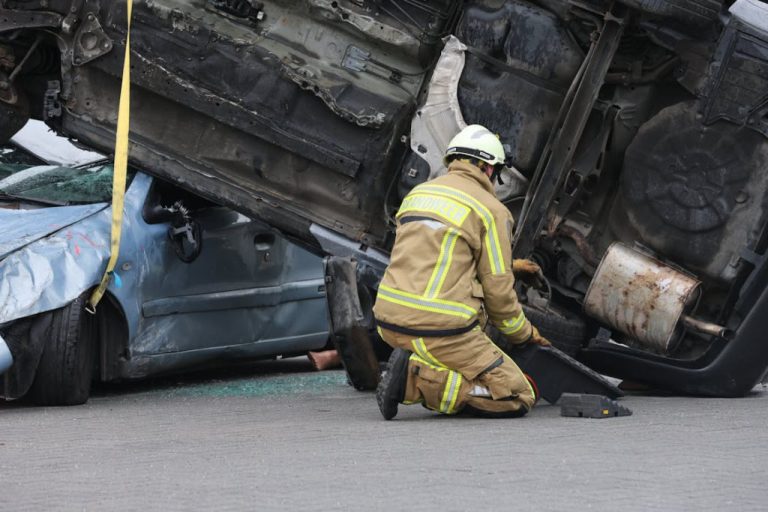

Key Ways to Prove Fault in a Multi‑Vehicle Crash
There is only one thing that can prove who was at fault in a multi-vehicle crash: clear evidence of who was careless and how that caused the chain reaction. Investigators look at how the driver acted, the rules of the road, and things like skid marks or damage to the car. The goal is to put together a step-by-step account of what happened.
These cases can be hard to understand because more than one driver may be at fault. In a typical multi-vehicle crash case, fault is often divided based on each driver’s actions just before impact. Even a small mistake, like following too closely, can trigger a larger accident.
You’ll learn the most important ways to prove fault, what evidence is most important, and how to figure out who is responsible when more than one driver is involved in this article.
What Evidence Proves Fault in a Multi-Vehicle Crash?
To prove fault, you need clear, objective evidence. This includes physical signs from the scene and records that show what each driver did before impact.
Common types of evidence include:
- Police reports: Officers document positions, damage, and possible violations
- Photos and videos: Dashcams, traffic cameras, and phone footage help recreate events
- Vehicle damage patterns: Show direction and force of impact
- Skid marks and debris: Reveal speed, braking, and sequence of collisions
- Witness statements: Add context, especially in chain-reaction crashes
Even small details matter. A few feet of skid marks or a cracked taillight can change who is considered at fault. Sometimes, investigators also uncover quiet clues that show a driver was distracted, such as delayed braking, drifting between lanes, or unanswered traffic signals.
How Do Investigators Reconstruct the Crash?
Accident reconstruction is where everything comes together. Experts analyze the scene and build a timeline of events.
They look at:
- Speed estimates based on impact damage
- Road conditions like rain, oil, or visibility
- Traffic signals and right-of-way rules
- Timing between each collision
Rear-end crashes often involve delayed braking or distraction. In multi-car accidents, that delay can trigger a chain reaction affecting several vehicles.

What Role Do Traffic Laws Play?
Traffic laws help assign responsibility quickly. If a driver breaks a rule, it often points directly to fault.
Examples include:
- Following too closely
- Running a red light
- Speeding in heavy traffic
- Unsafe lane changes
Negligence is defined as failing to act with reasonable care. In multi-vehicle crashes, more than one driver may meet that definition.
Can More Than One Driver Be at Fault?
Yes, and this is common. Multi-vehicle crashes rarely have a single cause.
Fault may be split based on each driver’s actions. For example:
- Driver A stops suddenly without reason
- Driver B follows too closely and hits Driver A
- Driver C is speeding and crashes into both
Each driver may carry a percentage of the blame. This is called comparative fault, and it affects how damages are shared.
Why Witnesses and Dashcams Matter More Than Ever
Technology has changed how fault is proven. A short video clip can settle disputes quickly.
Useful sources include:
- Dashcams from involved vehicles
- Nearby security cameras
- Traffic monitoring systems
Witnesses still matter, but video evidence often carries more weight because it removes guesswork.
What Should You Do After a Multi-Vehicle Crash?
Your actions right after the crash can protect your case.
Focus on:
- Taking photos of all vehicles and the scene
- Getting contact details from witnesses
- Requesting a police report
- Avoiding admitting fault at the scene
These steps help preserve evidence before it disappears or changes.
Key Takeaways
- Fault is proven using evidence like photos, reports, and damage patterns.
- Investigators reconstruct the crash to understand the sequence of events.
- Traffic law violations often point directly to liability.
- Multiple drivers can share fault in a single accident.
- Insurance companies assign fault percentages based on evidence.
- Dashcams and video footage are increasingly important.
- Your actions after the crash can strengthen or weaken your case.