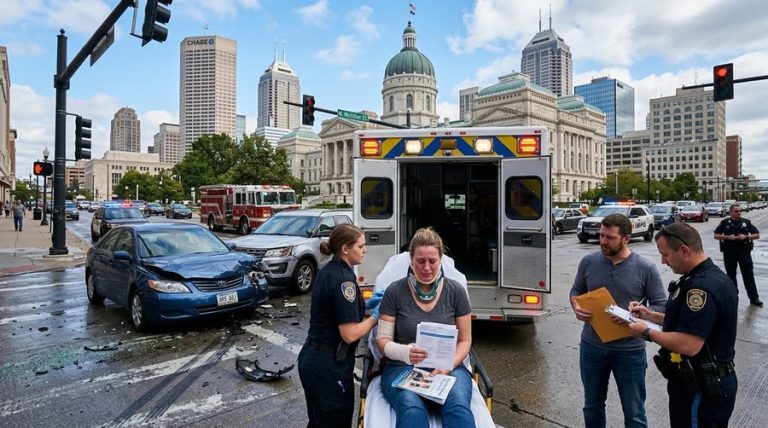

When the At-Fault Driver Disappears: Navigating a Hit-and-Run Claim
Nothing is more frightening than being hit off your bike by a driver who then… disappears.
You’re riding one second, lying on the pavement watching taillights the next. No licence plate. No one to hold accountable. Now you’re left with injuries, a damaged bike, and a whole lot of questions about motorcycle crash liability.
Here’s the truth:
Hit-and-run claims are tough, but they’re absolutely winnable when you know what to do.
Let’s jump in!
What you’ll uncover:
- Why Hit-and-Run Cases Are So Common
- What To Do Immediately After The Driver Flees
- How Motorcycle Crash Liability Actually Works
- Stacking The Right Insurance Coverage
- Building A Bulletproof Claim
Why Hit-and-Run Cases Are So Common
The numbers here are pretty shocking.
A new AAA Foundation study found that 15% of all police-reported crashes in 2023 involved a driver who fled the scene – the highest percentage of any recent year. That’s more than 919,000 crashes in one year.
And motorcyclists get hit the hardest.
Why? Because riders are already the most vulnerable users on the road. According to the NHTSA, motorcyclists were almost 27 times more likely to die in a crash than passenger car occupants. So when a driver clips a rider and panics, they often flee.
Common reasons drivers take off:
- No valid licence: 40% of known hit-and-run drivers in fatal crashes had no valid licence
- Unregistered vehicles: More than half were driving cars not registered to them
- Driving under the influence: Plenty of drivers flee because they’re drunk or high
- No insurance: Uninsured drivers would rather run than face the consequences
Understanding their motivation for fleeing is key to understanding why a trusted lawyer for hit and run motorcycle accidents is so important to the outcome of motorcycle crash liability — because without the at-fault driver in the picture, the whole case changes from “prove they did it” to “prove you deserve compensation anyway.”
What To Do Immediately After The Driver Flees
The first 10 minutes following a hit-and-run are more important than anything else. What you do now determines whether your claim is solid or weak.
Call 911 First
Don’t skip this step. Ever.
Call the police even if your injuries seem minor. The police report is by far the most important document for your claim. It creates an official record of the crash that insurance companies can’t overlook or dispute.
Collect Every Detail You Can Remember
Your memory is short after a traumatic incident. So, at the scene, write down everything:
- Partial licence plate numbers
- Colour, make and model of the vehicle
- Direction the driver headed
- Anything unique (dents, bumper stickers, roof racks)
Even small details can help police identify the driver later.
Look For Witnesses And Cameras
This is where most riders go wrong. Scope the area for any possible witnesses. Get names and numbers. Then look for cameras — traffic, business security, home doorbell cameras in the vicinity. Video will be erased quickly, so the quicker you ask, the better.
Get Medical Attention Straight Away
Adrenaline masks pain. Today’s seemingly innocuous injuries can become tomorrow’s major problems. Seeking medical attention generates a medical record that ties your injuries to the crash.
How Motorcycle Crash Liability Actually Works
Here’s where a lot of riders get confused…
If an at-fault driver isn’t available, who’s responsible for your injuries and damages? That’s the question of motorcycle crash liability in a hit-and-run.
The short answer: The fleeing driver is 100% legally liable. The issue is that you can’t collect from a driver you can’t locate.
That’s why hit-and-run cases are different. In most cases, rather than pursuing the other driver’s insurance, you pursue your own. This is known as a first-party claim and it changes the entire dynamic of how a case is constructed.
Most states consider a hit-and-run driver to be an “uninsured motorist” as a matter of law. The statute allows you to make a claim against your own uninsured motorist policy.
But here’s the rub — you’ve just given your insurer a financial incentive to fight your claim. The company that’s collecting your monthly premium is now your opponent.
That’s a big reason legal representation is important. Research indicates people that retained a lawyer were awarded 40% more in their insurance payout than those that did not.
Stacking The Right Insurance Coverage
Want to protect yourself before this ever happens? It starts with your policy.
Not all motorcycle insurance is created equal. The coverages that actually save you in a hit-and-run include:
- Uninsured Motorist Bodily Injury (UMBI): Covers medical bills and pain and suffering
- Uninsured Motorist Property Damage (UMPD): Covers the damage to your bike
- MedPay: Pays your medical costs regardless of fault
- Collision Coverage: Pays to repair or replace your motorcycle
The majority of riders decline these. They’re trying to save a few dollars on premiums. Don’t be like them.
Check to see if your state permits “stacking.” You may be able to “stack” coverage limits from multiple vehicles on the same policy. This can significantly increase your potential recovery.
Building A Bulletproof Claim
Now to the good stuff…
The most successful hit-and-run claims are one thing: solid evidence. The more you have, the less likely your insurance company is to underpay you.
Document Everything From Day One
Keep a folder for everything related to the crash:
- Police report and case number
- All medical bills and records
- Photos of your injuries and damaged bike
- Repair estimates and receipts
- Lost wages documentation from your employer
Every sheet of paper you save is leverage at the bargaining table.
Be Careful What You Say To Insurance
Adjusters will call you soon. Sometimes within hours. They are trained to talk you into saying something that damages your claim.
Keep it simple:
- Don’t give a recorded statement without legal advice
- Don’t speculate about your injuries
- Don’t accept the first settlement offer
These traps sink more hit-and-run claims than anything else.
Watch The Deadlines
Each state has a filing deadline. Miss the deadline and your claim dies. Hit-and-run claims can also have short timeframes to notify your insurer — sometimes only 30 days. Don’t delay.
Closing Thoughts
Hit-and-run motorcycle accidents are as bad as it gets. You’re injured. The other driver is gone. And now you’re battling your own insurance company for what you’re owed.
But you’re not powerless.
Call 911, document everything, have the proper coverage and know how to file your claim to maximize the chances of a fair settlement or award. After a collision, figuring out motorcycle crash liability is step one. Taking action is step two.
Stay safe out there.