
Mileage vs. Maintenance History: What Matters More When Buying a Used Car?
Two vehicles can be the same year, make, and model yet offer very different ownership experiences. One may have low mileage but a history of missed oil changes and long periods of inactivity. The other may have traveled considerably farther while receiving consistent maintenance and timely repairs.
Which one is the better purchase?
Mileage matters, but it does not tell the complete story. Maintenance history, vehicle age, driving conditions, and current mechanical condition all help determine how much useful life a used car may have left. As shoppers compare Used Cars for Sale Dayton, understanding how these factors work together can help them identify genuine value instead of simply choosing the lowest number on an odometer.
Why Buyers Focus on Mileage
Mileage is easy to understand and compare. All else being equal, a car with fewer miles has generally experienced less use than one with substantially more. Its engine has completed fewer cycles, its transmission has shifted fewer times, and its seats, suspension, bearings, and other components may have experienced less wear.
Lower mileage can also improve resale value and may mean that some major maintenance milestones are still in the future. However, “all else being equal” is the important qualification. Used vehicles rarely have identical histories.
An odometer cannot show whether a car received the correct oil on schedule, spent years making short trips, sat outside through several winters, or was driven aggressively. It also cannot reveal whether previous owners responded promptly to warning lights and unusual noises.
Mileage is useful, but it should be treated as one piece of evidence rather than a verdict.
What Maintenance Records Can Reveal
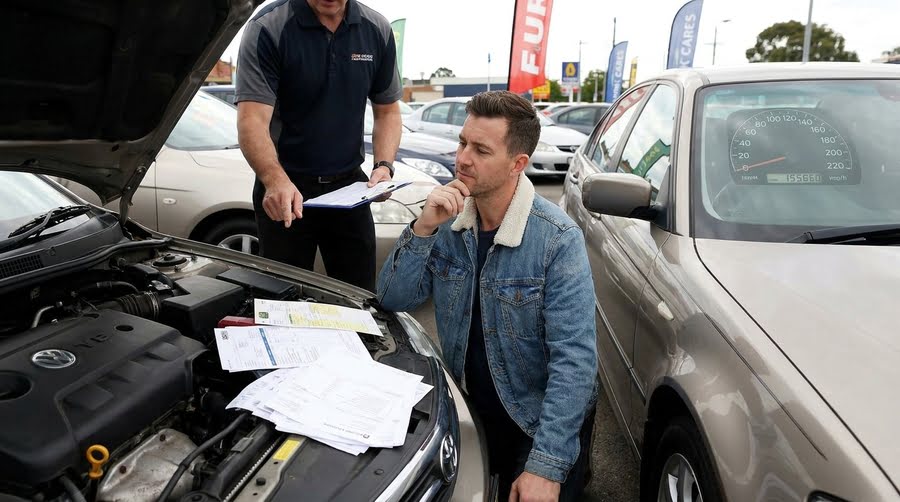
A documented maintenance history provides context that mileage alone cannot offer. Receipts and service records may show whether the vehicle received regular oil and filter changes, brake service, tire rotations, fluid replacements, and other work recommended by its manufacturer.
The most useful records form a consistent timeline. They identify the vehicle, date, mileage, service performed, and business that completed the work. A few recent receipts are encouraging, but they do not necessarily explain how the car was treated throughout its life.
Look for evidence of routine care as well as larger scheduled services. Depending on the vehicle, those may include:
- Transmission-fluid service
- Coolant replacement
- Spark-plug replacement
- Timing-belt service
- Brake-fluid replacement
- Differential or transfer-case service
- Battery or hybrid-system inspections
- Fuel-system and air-filter maintenance
Records can also expose recurring problems. Several repairs involving the same system may indicate that the underlying issue was never fully resolved. On the other hand, documentation of a common failure followed by a proper repair may reduce uncertainty.
A well-organized service history does not guarantee a trouble-free car, but it gives a buyer more information on which to base a decision.
Highway and City Miles Are Not Equal
A vehicle’s operating environment affects how its mileage accumulates.
Long highway journeys generally involve steady engine speeds, fewer gear changes, and less frequent braking. City driving can include repeated cold starts, short trips, extended idling, constant shifting, and stop-and-go traffic. Those conditions may increase wear on brakes, transmissions, cooling systems, and batteries even when the odometer climbs slowly.
That does not mean every highway-driven car is superior. A highway vehicle may still have been overloaded, poorly maintained, or driven in severe weather. A city car may have received exceptional care and preventive maintenance. The distinction simply illustrates why mileage needs context.
Ask the seller how the vehicle was used. Was it a commuter car, family vehicle, commercial fleet unit, rideshare vehicle, or tow vehicle? The answer can help explain both its mileage and likely wear patterns.
Low Mileage Can Hide Age-Related Problems
A low-mileage vehicle may appear especially desirable, but time affects cars even when they are not being driven.
Rubber seals, hoses, belts, tires, and suspension bushings can deteriorate with age. Batteries lose capacity. Fluids absorb moisture or degrade. Brake components may corrode, and fuel can create problems when a vehicle sits unused for extended periods.
Frequent short trips can also be demanding. The engine may not always reach full operating temperature, and the charging system may not have enough time to replenish the battery after each start.
When inspecting an older low-mileage car, ask why it was driven so little. Occasional weekend use with regular maintenance is different from several years of neglected storage. Check the age of the tires, condition of the fluids, battery health, and evidence of leaks or dried seals.
Low mileage is an advantage only when the rest of the vehicle’s condition supports it.
High Mileage Is Not an Automatic Dealbreaker
Modern vehicles can accumulate substantial mileage while remaining useful and dependable. A higher-mileage car with thorough maintenance records may be a more transparent purchase than a lower-mileage example with an unknown history.
The buyer must still account for wear. Suspension components, wheel bearings, engine mounts, cooling-system parts, alternators, starters, and air-conditioning systems may require attention as mileage increases. Even a well-maintained car eventually needs repairs.
The key question is not simply whether a vehicle has high mileage. It is whether its current price reflects its age, condition, maintenance history, and likely upcoming expenses.
Review the manufacturer’s maintenance schedule and compare it with the records. If several major services are due soon, include their estimated cost in the purchase budget. A competitively priced vehicle can become expensive if it immediately needs tires, brakes, fluids, and a timing belt.
Verify the Mileage
The displayed mileage should be compared with the vehicle’s available documentation.
Service invoices, inspection reports, title documents, and vehicle-history reports may contain mileage readings from different points in time. Those readings should progress logically. Also examine the physical condition of the steering wheel, pedals, driver’s seat, buttons, and door handles. Heavy wear in a supposedly low-mileage vehicle deserves further investigation.
The National Highway Traffic Safety Administration provides information on recognizing and reporting odometer fraud. Buyers should investigate discrepancies instead of accepting an explanation without supporting documents.
Electronic odometers have made traditional mechanical rollback less obvious, but they have not eliminated mileage fraud. Documentation and physical condition should tell a consistent story.
Current Condition Matters Most
Neither a low odometer reading nor a thick folder of receipts replaces an inspection of the vehicle as it exists today.
A pre-purchase inspection can identify active leaks, worn suspension parts, corrosion, tire problems, diagnostic trouble codes, previous repairs, and other issues that may not appear in a history report. The Federal Trade Commission notes that a vehicle-history report is not a substitute for an independent mechanical inspection because history reports typically do not list every mechanical problem.
A thorough test drive is equally important. Begin with a cold engine when possible and observe:
- How quickly the engine starts
- Whether warning lights remain illuminated
- How smoothly the transmission engages and shifts
- Whether the car accelerates without hesitation
- How it tracks on a straight road
- Whether the steering vibrates or pulls
- How the brakes respond
- Whether the suspension makes unusual noises
- Whether climate controls and electronics work properly
After the drive, look underneath the car for fresh fluid and check for new odors, smoke, or warning messages.
How to Compare Two Used Cars
When choosing between a lower-mileage car with limited records and a higher-mileage car with a documented history, compare them systematically.
When comparing used cars, buyers should look beyond the asking price and model year. Service history, mileage, current mechanical condition, previous use, and upcoming maintenance costs can all affect the actual value of a vehicle and the ownership experience after purchase.
Start with the maintenance history. Determine what work has been completed, what is overdue, and what will be required during the next year. Then compare current mechanical condition through inspections and test drives.
Consider the following questions:
- Are the mileage readings consistent across the available records?
- Did the vehicle receive maintenance at appropriate intervals?
- Has it completed major age- or mileage-based services?
- Are there signs of corrosion, leaks, collision damage, or neglect?
- How was the vehicle previously used?
- What repairs or maintenance will it need soon?
- Does the asking price reflect those upcoming costs?
- Are there any unrepaired safety recalls?
NHTSA’s recall search allows shoppers to check a vehicle identification number for certain unrepaired safety recalls. Recall status should be reviewed separately from ordinary maintenance history.
The Better Car is the One with the Better Story
Mileage is valuable information, but maintenance history gives that number meaning.
A lower-mileage vehicle may be the best choice when it has been driven regularly, stored properly, and maintained according to schedule. A higher-mileage vehicle may offer better value when its records demonstrate consistent care and its current condition is strong. Neither should be purchased based on mileage alone.
The smartest approach is to evaluate the complete story: age, mileage, prior use, service documentation, present condition, inspection results, and upcoming costs. When those details support one another, buyers can make a far more confident decision—and choose a used car based on evidence rather than a single number.