
The Digital Side of Modern Car Ownership
If you bought a car fifteen years ago, you got a machine with wheels, an engine, and maybe a radio that played FM. Today’s vehicles are something entirely different. They’re computers on wheels that track your location, learn your driving habits, connect to the internet, and communicate constantly with manufacturers and third-party services.
Owning a modern car now means navigating a digital ecosystem that extends far beyond the physical machine itself. This shift has fundamentally changed what car ownership looks like, introducing new conveniences, new responsibilities, and new questions about privacy and control.
Connected Vehicles and Constant Data Collection
Modern cars generate enormous amounts of data. Every trip produces information about where you traveled, how fast you drove, how hard you braked, when you accelerated, and even the routes you preferred.
This data flows from your vehicle through cellular connections, usually to servers owned by the manufacturer. Some of this monitoring happens transparently, while other collection methods are buried in terms of service documents that few people actually read.
The most obvious benefit is convenience. Your car can alert you when maintenance is needed based on actual usage patterns rather than guesswork. Remote diagnostic systems let mechanics understand problems before they arrive at the shop.
Emergency services can be contacted automatically if your vehicle detects a crash. These capabilities genuinely improve safety and reduce frustration.
But this data collection also raises legitimate concerns. When you drive, your vehicle is essentially keeping a log of your movements, the places you visit, and the times you visit them. Different manufacturers handle this information differently.
Some companies are transparent about data retention and sharing policies, while others remain vague. The question of who has access to your driving data, how long they keep it, and what they do with it has become a crucial part of car ownership that few drivers fully understand.
Manufacturers argue this data helps them improve vehicles and identify safety issues. Some have been caught selling anonymized driving data to third parties, raising questions about consent and user expectations. Most drivers don’t realize the full scale of data collection happening.
Digital Services and the Subscription Model
The way people access car services has changed dramatically. Dealerships still exist, but they’re increasingly supplemented by remote updates, online scheduling systems, and digital documentation. When your car needs service, you might book an appointment through an app, receive diagnostics via that same app, and pay for everything digitally without visiting a dealership in person.
This digital infrastructure comes with perks:
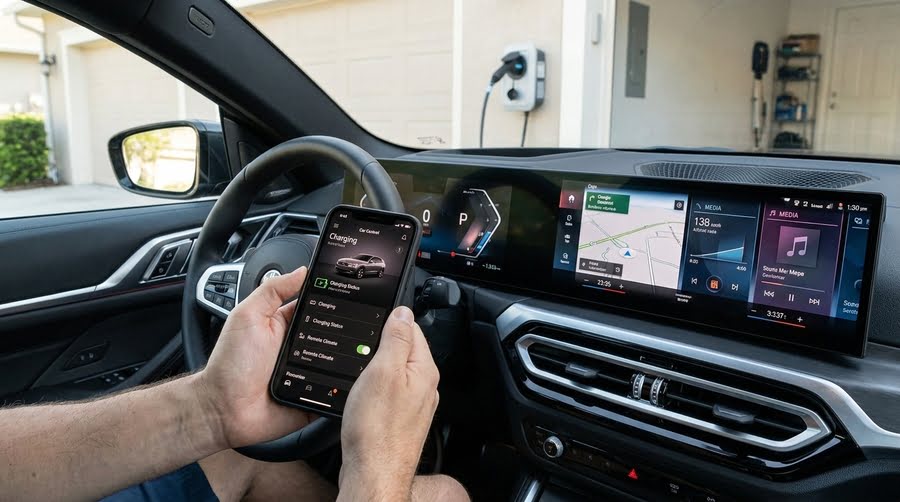
- Owners can track their car’s health remotely, monitor fuel economy, locate their vehicle if it’s stolen, and control certain functions through smartphone apps
- Software updates happen over the air, meaning your car can receive performance improvements, new features, or security patches without a visit to the dealership
Beyond maintenance, many manufacturers now offer subscription-based services for features that used to come standard. Heated seats, advanced navigation, even basic driving assistance features that your car’s hardware supports might be locked behind monthly subscription fees.
This represents a fundamental shift in how consumers own and use their vehicles. You’re increasingly paying for access to features rather than owning them outright.
Online Platforms and Ownership Experience
Dealership websites, manufacturer portals, and connected car apps have become central to modern ownership. When you buy a car, you typically create an online account, register your vehicle, and set up app access. Through these platforms, you manage warranties, track service history, pay for services, and communicate with the dealership.
This makes tasks easier. You can schedule maintenance anytime and see your complete service history without paper records. However, your registration, insurance information, location data, and purchase records are spread across various platforms held by manufacturers, dealerships, insurance companies, and data brokers. This fragmentation creates risk if any database is compromised, and you have limited visibility into what data exists about you and how it’s used.
Privacy, Security, and Digital Identity
The intersection of connected vehicles and online privacy presents challenges that didn’t exist in previous decades. Your car knows where you go, how long you stay there, and when you return home. When this location data connects to your online identity, it creates a detailed profile of your life that extends far beyond driving.
This is where the broader digital infrastructure of car ownership becomes important. Your vehicle connects to the internet through cellular networks, and that connection creates a digital identity. Understanding how this works is crucial for any car owner concerned about privacy.
Think of it this way: your vehicle has an IP address, just like your home computer or smartphone. That address can be used to track your online activity and location. Knowing how to check an IP lookup for your connected devices helps you understand what information is publicly available about your digital footprint.
Many car owners don’t realize that their vehicle’s internet connection can be traced and monitored in similar ways. If you’re concerned about your digital privacy in the context of connected vehicles, understanding the basics of how IP addresses and internet connections work gives you better control over your digital identity across all your devices, including your car.
The good news is that security has improved significantly. Most modern vehicles include encryption for their data transmissions, and manufacturers have invested in cybersecurity. The challenge is that this security landscape keeps evolving, and manufacturers sometimes fall behind on security updates. Your vehicle’s security depends partly on whether the manufacturer actively patches vulnerabilities and pushes updates to your car.
Beyond security, there’s the question of data rights. If your vehicle collects data about your driving, who owns that data? Can manufacturers sell it to insurance companies, advertisers, or other third parties? Different jurisdictions are beginning to address these questions through regulation, but the answers remain inconsistent and evolving.
Insurance and Digital Transparency
Digital connectivity has opened new possibilities for how insurance companies assess risk. Telematics programs, where drivers voluntarily install devices that track their driving behavior, offer the promise of lower premiums for safe drivers. Some car owners embrace this, finding that their careful driving habits are finally being rewarded. Others view it as creeping surveillance.
Many insurance companies now request access to your vehicle’s data as a condition of coverage. They want to see actual driving records to better assess risk. This creates a situation where refusing to share this data might mean higher premiums or difficulty finding coverage. The power dynamic here has shifted in ways that car owners should understand. Your driving data has become something insurers actively want, and increasingly, they’re willing to penalize drivers who won’t share it.
Many drivers don’t fully understand how algorithms use driving data to calculate premiums. Insurance companies apply their own logic to this data, and drivers often lack insight into what behavior triggered rate changes, making it difficult to assess whether sharing data is truly in their interest.
Looking Forward
The digital landscape of car ownership continues to change rapidly. Battery management systems in electric vehicles generate additional data points about charging patterns, energy efficiency, and vehicle health. Autonomous driving features collect extensive sensor data from every journey. Vehicle-to-vehicle communication standards are developing that will allow cars to share information with each other about road conditions and potential hazards. Over the coming years, connectivity will deepen further, and the amount of data being collected will increase exponentially.
This doesn’t mean the future of car ownership is necessarily darker or more restrictive. Better technology can mean better safety, lower emissions, and more convenient ownership experiences. Early data suggests that connected vehicles reduce accidents, improve fuel efficiency, and help owners avoid costly repairs through predictive maintenance.
But these benefits come with choices about privacy, autonomy, and control that every car owner should consciously make rather than passively accept. The challenge for policymakers and manufacturers alike is finding the balance between innovation and protection. Some regions are implementing stronger regulations around data ownership and privacy rights, which may eventually provide more protection for consumers and more transparency about how their information is used.
Conclusion
Owning a car today means accepting a level of digital integration that would have seemed impossible two decades ago. Your vehicle is a connected device, a data collection point, and a portal into your personal habits and location. This reality isn’t going away, and in many ways, the digital aspects of car ownership will only deepen.
The key to navigating this landscape is understanding what’s happening. Know what data your car collects and where it goes. Read the privacy policies, even if they’re tedious. Understand what services you’re paying for and which features come standard. Make conscious choices about which features to enable and which to disable. Take advantage of conveniences like remote diagnostics and online scheduling, but do so with awareness of what information you’re sharing.
Modern car ownership is fundamentally different from what it was a generation ago. The digital transformation isn’t something to fear or ignore, but it’s definitely something to understand. Your car is no longer just a vehicle. It’s a connected device that’s part of your broader digital life, and taking control of that relationship starts with knowing the full scope of what’s happening when you turn on the ignition.


